
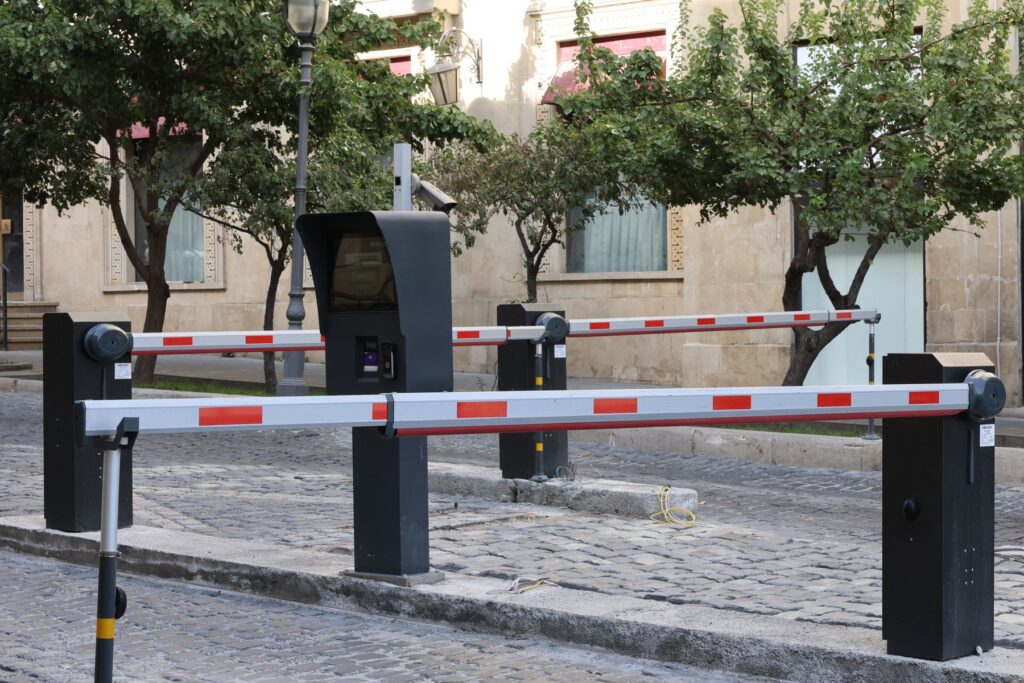
In a residential complex accesses are used by people with different habits throughout the day. Vehicle gates, pedestrian entrances and carports must move predictably and respond to consistent commands. Automation aims to simplify passage, but must start from the physical characteristics of each gate. Rain, wind, slopes and available space can affect movement and the necessary protections. Cycle frequency also helps correctly size the operational components.
The demonstrative project treats accesses as a coordinated system. Motorization, safety devices and opening permissions are evaluated together, preventing each entrance from following independent logic or users having to manage unnecessarily different tools.
The need
The openings have different dimensions, weights and usage frequencies. The main gate controls vehicle flow, while pedestrian passages require their own timing and modes. Residents, administration and technicians may also have different needs for access and for unlocking under special conditions.
Automating an existing structure requires checking its condition. Irregular movement, worn hinges or a non‑free run are not solved by motorisation. It is also necessary to observe the points where people, bicycles or vehicles can enter the movement area and define the appropriate protections for the specific case.
The designed solution
The site survey collects geometry, travel, clearances, power supplies and passage frequency. For each opening the expected behaviour is defined, including partial opening, re‑closing and unlocking mode. Only after this verification are the drive and control unit sized.
Safety devices are chosen in relation to the actual routes and work with the movement logic. Remote controls, intercoms or access credentials provide consent according to the established responsibilities, while the automation control unit continues to manage the opening. This separation makes the operation clearer and facilitates the detection of any anomalies.
After installation, timings and behaviour are adjusted, then test cycles are carried out under the available conditions. Personnel receive instructions on normal use, the procedure to follow in case of power loss, and the checks to schedule.
A system designed for everyday use
Consistent commands reduce uncertainty for residents and simplify credential management. Administration can organise delivery and revocation without multiplying devices or procedures. Accesses remain distinct in their functions, but follow a common logic understandable to everyone.
Over time the movement can change due to wear, settlements or structural modifications. For this reason automation does not end with handover: periodic checks help keep settings and devices consistent with the actual conditions. Any future integrations must be evaluated without altering the safety functions of the opening.
A technical survey allows understanding which adjustments are needed before selecting motor, controls and protections for common accesses.