
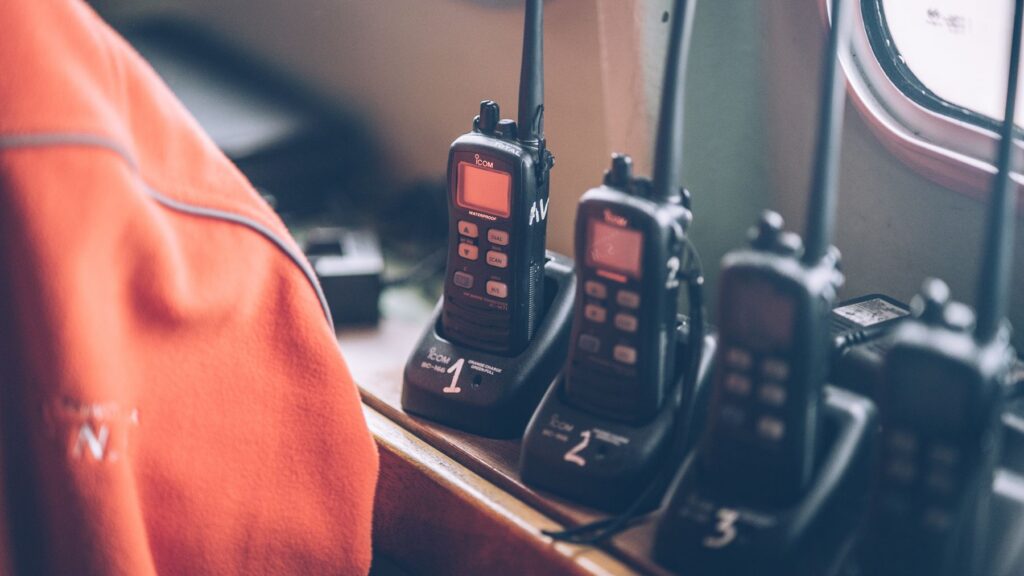
When teams and equipment work in different areas, communication must be available where it is truly needed. Buildings, metal structures, underground rooms, distances and the terrain morphology can significantly alter coverage. A professional radio network therefore requires surveys and tests, not an estimate based solely on the declared power of the devices. The terrain remains part of the system.
This demonstrative project concerns an operational site composed of indoor environments and outdoor areas. The goal is to organize understandable communications between work groups, defining architecture and terminals based on the activities performed and shared priorities.
The need
Operators move along different routes and must be able to contact their group without searching for channels or procedures each time. Some zones have obstacles and shielding, while others are exposed to external conditions. The expected traffic and the number of users also influence how communications should be organized.
The solution must consider power continuity, technically suitable installation points and authorisation conditions applicable to the use of the radio spectrum. Frequencies and devices cannot be chosen assuming every configuration is freely usable: verification depends on the planned technology and the specific case.
The designed solution
The work starts from the operational scenario. Users, groups, routes and locations where communication is needed are identified. The site survey and preliminary measurements allow recognizing obstacles, distances and critical areas, creating a concrete basis for the architecture.
Stations, antennas, repeaters and links are sized in relation to the required coverage and management. Terminals are configured with understandable groups, avoiding functions that do not benefit the activities. Power supplies and main nodes are included in the assessment so that the infrastructure can be documented in a unified way.
After installation, the significant environments are traversed with the devices configured as in the real service. Field tests show where the quality is adequate and where adjustments are needed. Issues are recorded without publishing details that could describe the site’s coverage or architecture.
A system designed for everyday use
A clear group structure reduces ambiguity and makes it easier to add new operators. Instructions focus on the actual procedures: who to contact, which group to use and how to report a problem. Technology thus remains at the service of coordination, rather than adding complexity during work.
Documenting configurations and infrastructure creates a basis for maintenance and expansions. If routes, users or areas to serve change, new checks can be compared with the initial project. Coverage continues to be measured at operational points, without assuming that a modification automatically maintains performance.
To set up a radio network it is useful to describe the territory, users and operational priorities: from this data the necessary measures and checks are defined.